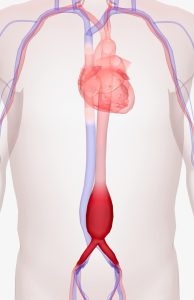
An abdominal aortic aneurysm (AAA) is a serious condition that often develops silently over many years. It occurs when the wall of the abdominal aorta—the main blood vessel that carries blood from your heart to your lower body—weakens and begins to bulge outward like a balloon. If the aneurysm continues to grow, the wall can rupture, leading to life-threatening internal bleeding.
Fortunately, a simple, painless ultrasound exam can detect an aneurysm early, before it causes symptoms or becomes dangerous.

Silent Symptoms and Warning Signs
Most people with an abdominal aortic aneurysm feel no symptoms at all until the aneurysm becomes very large or ruptures. That’s why screening is so important.
When symptoms do appear, they may include:
• A deep, persistent pain in your abdomen, side, or lower back
• A pulsing or throbbing feeling in your abdomen (similar to a heartbeat)
• Sudden severe pain, dizziness, or fainting — which may signal a rupture and require emergency medical attention
Because the condition can progress silently, waiting for symptoms is not safe. Early detection through screening is the key to preventing disaster.

Who is at Risk of an Abdominal Aortic Aneurysum?
Abdominal aortic aneurysms are most common in:
• Men over 65 years old
• Smokers or former smokers
• Individuals with high blood pressure or high cholesterol
• People with a family history of aneurysms
• Those with a history of atherosclerosis (plaque buildup in arteries)
In the United States, it’s estimated that 1 in every 250 men over age 65 has an AAA large enough to require monitoring or treatment. Women can also develop aneurysms, though they are less common and often more dangerous when they occur.
If this is you and you would like a screening, Visit Health Hub Clinic to get you screenings order!
How the Aneurysm Screening Works
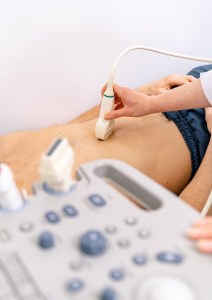
The abdominal aortic ultrasound is a fast, non-invasive, and completely painless test. It takes about 10–15 minutes and involves no needles, radiation, or special preparation.
During the test:
1. You’ll lie comfortably on your back.
2. A technologist places warm gel on your abdomen and gently moves a small probe (called a transducer) over your skin.
3. The ultrasound uses harmless sound waves to create live images of your aorta.
4. A radiologist then measures the diameter of your aorta to check for enlargement or weakening.
At Health Guardian Imaging, our radiology team reviews your results the same day and provides a report for your clinician for follow-up.
What Happens If an Aneurysm Is Found?
If the ultrasound detects an aneurysm, the next step depends on its size and growth rate:
• Small aneurysms (3-3.9 cm): Usually monitored with repeat ultrasounds every 6–12 months.
• Medium aneurysms (4.0–4.9cm): Monitored more closely, often every 3–6 months.
• Large aneurysms (5-5.5 cm or greater) or enlargement of 5mm in a 6 month period: Usually requires surgical repair to prevent rupture and ultrasound every 3-6 months.
Treatment options include:
• Endovascular repair (EVAR): A minimally invasive procedure where a stent graft is inserted through small groin incisions to reinforce the weakened artery wall.
• Open surgical repair: Involves replacing the diseased section of the aorta with a synthetic graft.
Long-Term Outcomes: Treated vs. Untreated
The difference between treated and untreated aneurysms is striking.
• Untreated large aneurysms have a rupture risk as high as 50% within five years, and most ruptures are fatal before the patient reaches the hospital.
• Treated aneurysms, by contrast, have an excellent outlook. Modern surgical or endovascular repair has a success rate above 95%, and most patients return to normal activities within weeks.
With regular follow-up imaging and healthy lifestyle habits, such as quitting smoking, controlling blood pressure, and managing cholesterol, long-term survival after treatment approaches that of people without aneurysms.
Why Early Screening Matters
Because abdominal aortic aneurysms rarely cause symptoms, screening is the only reliable way to detect them early. The U.S. Preventive Services Task Force recommends:
• Screening ultrasound for adults aged 65 or older who have ever smoked
• Screening ultrasound for adults aged 50 or older with a smoking history, family history of aneurysms, cardiovascular disease, or connective tissue disorders
Screening saves lives. Early detection allows for close monitoring, timely treatment, and prevention of catastrophic rupture.
Take the Next Step
If you’re in a risk group—or simply want peace of mind—schedule a screening ultrasound today. The test is quick, safe, and affordable, and it could literally save your life.
Health Guardian Imaging is committed to helping our community stay one step ahead of silent but preventable conditions. Early detection is the best protection.